You have been to the gym for eight months. Your weight is where you want it, your clothes fit better, but that one pocket of fat on the lower abdomen or the outer thighs has not moved at all. This is the point where most people in Ajman start searching for non-surgical body contouring.
It is a fair search. These treatments work. But they work within limits, and the gap between what people expect and what the technology actually delivers is where disappointment comes from. Here is an honest picture.
What body contouring is — and what it is not
Body contouring reshapes a specific area. Weight loss reduces your overall body mass. They are two different goals, and they are not interchangeable.
A body contouring session targets a defined pocket of subcutaneous fat — the layer you can pinch between your fingers — or tightens skin over a defined area. It does not touch visceral fat around the organs, it does not change your metabolism, and it will not move the number on your scale in any meaningful way. Many patients finish a full course of treatment having lost a dress size while their weight stayed identical.
If your primary goal is to lose 15 kilograms, body contouring is the wrong starting point. Get the weight down first through nutrition and activity, then contour what remains.
The main technologies, in plain terms
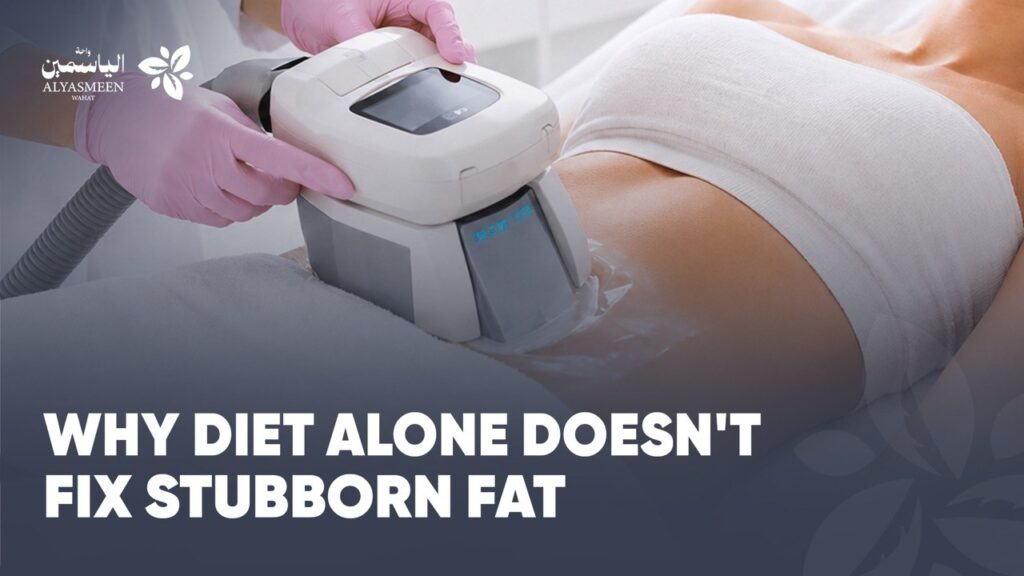
Cryolipolysis (fat freezing) cools a targeted pocket of fat to a temperature where fat cells break down, and the body clears them gradually over the following weeks. Best for defined bulges that sit inside an applicator — lower abdomen, flanks, inner thighs, bra line.
Radiofrequency (RF) heats the deeper skin layers to stimulate collagen and tighten mild laxity. Best for skin quality and mild sagging, not for volume reduction.
HIFU and ultrasound-based systems deliver focused energy at a set depth to disrupt fat or lift tissue, depending on the setting.
EMS muscle stimulation contracts the muscle intensively to build tone in the abdomen or glutes. It is a muscle treatment, not a fat treatment, and it is often combined with the others.
A good clinic will not sell you one machine for everything. The right choice depends on whether your concern is volume, loose skin, muscle tone, or a combination — and in most cases it is a combination.
The numbers you should actually expect
Published data for cryolipolysis typically shows a reduction of roughly 20 to 25 percent of the fat layer in the treated area after a full course. That is real and visible — but it is a percentage of a layer, not the removal of a bulge.
Practically, this means:
- Sessions: most areas need 2 to 4 sessions, spaced 4 to 8 weeks apart. A single session is rarely enough.
- Timeline: you will not see anything in week one. Early change usually appears around weeks 4 to 6, with the final result at 8 to 12 weeks, because the body needs that time to clear the treated cells.
- Measurement: results show up in centimetres and in how clothes fit, not on the scale.
- Downtime: typically none. Redness, numbness, tenderness or mild swelling for a few days is normal.
Who gets the best results
The ideal candidate is close to their target weight, has been stable over the past few months, has good skin elasticity, and is targeting a specific stubborn area. Someone in that position is usually very satisfied.
Results are more limited if there is significant excess weight, substantial loose skin (particularly after major weight loss or multiple pregnancies), or an expectation of surgical-level change. In those cases, the honest answer from a clinic should be a combined plan, a different treatment, or a referral — not a package sale.
Treatment is generally not suitable during pregnancy or breastfeeding, with certain cold-sensitivity disorders, with implanted electronic devices, or over recent surgical sites. Your physician will screen for all of this at the consultation.
Keeping the result
Treated fat cells are cleared and do not return. The remaining cells, however, can still expand. If your weight climbs by several kilograms after treatment, the contour you paid for will soften — often in a different pattern than before. The result holds when your weight holds.
Before you book
Ask these four questions at any clinic in Ajman:
- Which technology are you recommending for my specific concern, and why that one?
- How many sessions will I realistically need, and what does the full course cost?
- What change should I expect, in centimetres, and by when?
- Who performs the session — and is the treatment plan set by a licensed physician?
A clinic that answers all four in specific numbers is a clinic worth trusting. A clinic that promises a fixed result in one session is not.
Book your body assessment today. Our team speaks Arabic and English.
This article is for general information and does not replace a medical consultation. Results vary between individuals.